
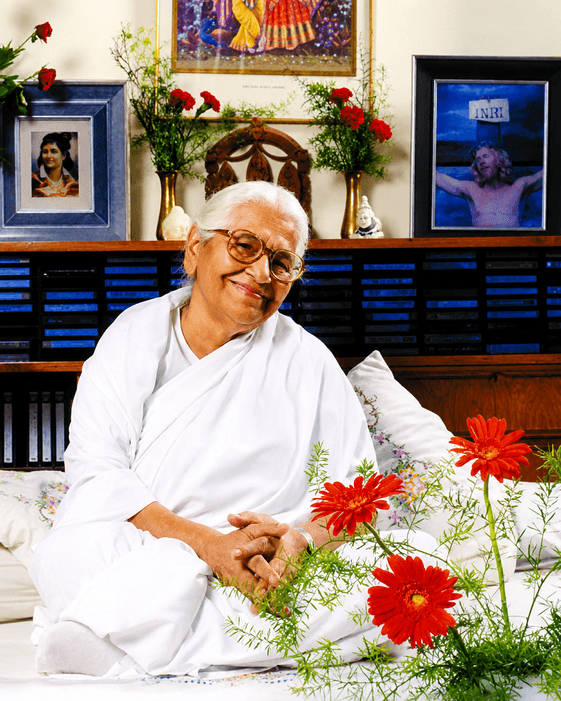
Archival portrait · Arpana Trust archive
Param Pujya Ma · 1924-2008
A life of inquiry.
A legacy of service.
Param Pujya Ma's search for truth became the philosophical foundation of Arpana — a belief that humane and spiritual values find their fullest expression in how we live, serve and relate to one another.
Explore her life1924-1957
A life in the world
Before she became Ma, she was an educator, a public figure and a questioner.
Born on 26 August 1924, she spent her early adult life in public view. Arpana's recorded biography describes a career in physical education and an active professional and civic life, culminating in her appointment as Director of Physical Education at Punjab University.
She spoke in public, taught, and organised. Nothing about that life suggested the turn it would take. For the visitor meeting her for the first time, this matters: the inquiry that followed came from someone fully engaged with the world, not withdrawn from it.
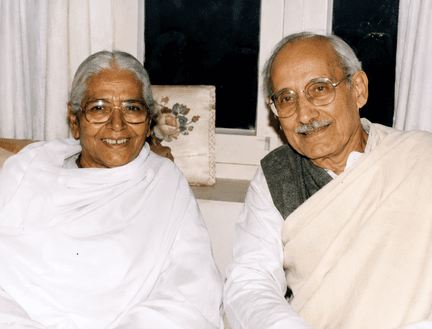
1957
Applause gave way to a question.
Arpana's account records a public speech in 1957 in which she questioned whether religion had any relevance left. The address was well received. The unease that followed was her own: could she reject something she had never truly investigated?
The question did not go away. It became a decision.
The pivot
9 March
1958
The search began.
The date Arpana still marks each year as the beginning of her conscious inquiry — the day she chose, in the Trust's words, the practical spiritual path.
1958-1962
Four and a half years of inquiry.
What followed was not retreat but study. Arpana's records describe an intensive period of reading, questioning and scriptural interpretation, written down as it happened. The manuscripts remain the primary source of everything Arpana later published.
years of study
granthas (volumes)
handwritten pages
the period of inquiry
Twenty-six granthas, roughly eight thousand handwritten pages, completed on 26 August 1962 — her thirty-eighth birthday.
Counts as recorded by Arpana Trust. No photographs of the manuscripts are in the supplied archive; the pages themselves will take this position when digitised.
Urvashi
Ancient wisdom, brought into daily life.
Urvashi is the name Arpana gives to Param Pujya Ma's body of teaching — her elucidations of the Bhagavad Gita, the principal Upanishads and the Japuji Sahib, with the questions seekers asked her and the answers she gave.
It reads less as theology than as a manual for living: how to hold relationships without attachment, meet fear, see through ego, carry duty lightly, practise humility, and let self-awareness turn into compassion and service.
- Relationships
- Attachment
- Fear
- Ego
- Duty
- Humility
- Self-awareness
- Compassion
- Service
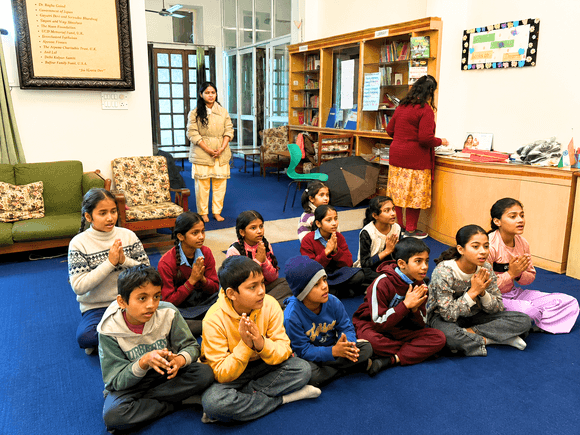
We are not separate from one another.
01
Unity
All people, whoever they are and of whichever faith, belong to one family. Difference is real; separation is not.
02
Inner transformation
Change begins in the individual — in attention, honesty and the willingness to see one's own ego clearly.
03
Humane values
Compassion, integrity, forgiveness and fearlessness are not ideals to admire but disciplines to practise daily.
04
Service
To serve those in need is the most practical form of devotion — the point at which philosophy becomes visible.
- Compassion
- Honesty
- Integrity
- Humility
- Forgiveness
- Fearlessness
- Service
- Universal human unity
How these ideas shape Arpana's institutions today: The Idea Behind Arpana →
1962
She gave the work away.
On 27 August 1962, according to Arpana's historical record, Param Pujya Ma entrusted the whole body of work to Arpana Trust — for preservation, research and dissemination. It was never to be hers.
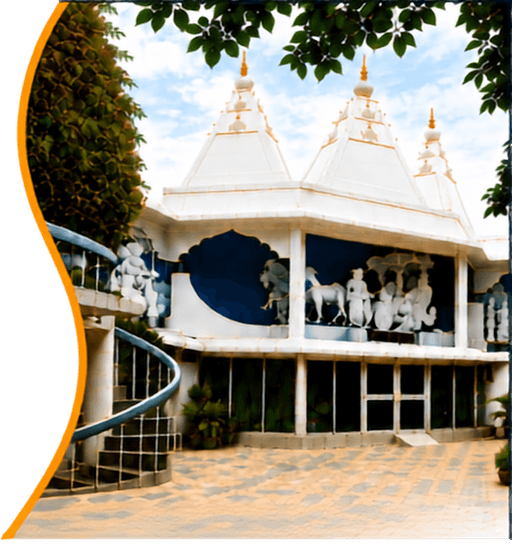
1965 · Madhuban
The Ashram at Madhuban, in Karnal district, Haryana, became the community's home — and, from 1980, the site of a 13-bed cottage hospital that is today a 100-bed charitable institution.
The philosophy did not remain within an Ashram.
Service was not separate from the philosophy. Service became its practical expression.
- Healthcare
- Education
- Women & communities
- Rural livelihoods
- Human dignity
Service as practice
Four ways the idea took institutional form.
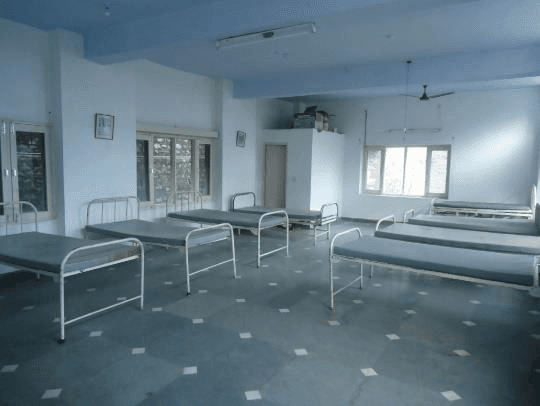
Healthcare
A 13-bed beginning in 1980 that developed into Arpana Hospital.
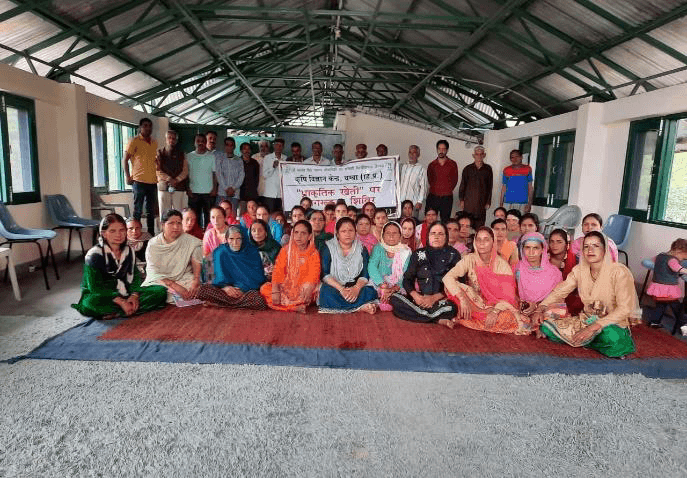
Women & communities
Women organising through self-help groups, savings, financial participation and leadership.
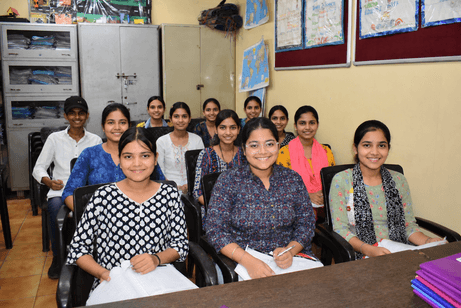
Education
First-generation learners progressing through school, higher education and skills.
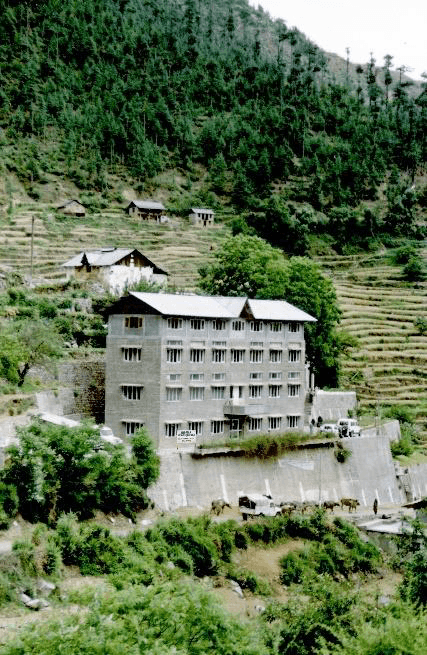
Livelihoods
Farmers strengthening agriculture, irrigation, producer organisations and market access.
A voice preserved across generations.
Arpana Trust holds the record of six decades of teaching in every medium it was ever made in, and is moving it, item by item, into a digital archive. Counts below are as reported for 2025-26; where media overlap they are not summed.
01
Handwritten notes
1958 →
The daily record of the inquiry, kept as it happened.
02
Manuscripts
26
Granthas completed 1962 and entrusted to the Trust.
03
Audio
166
Satsang recordings with sound restored in 2025-26.
04
Video · VHS & Betacam
206
Tapes restored and enhanced in 2025-26.
05
Digital archive
Ongoing
Publications, a documentary on her life, and a Bhakti meditation film released this year.
Timeline · as recorded by Arpana Trust
1924
Born on 26 August.
1957
Turning point in Arpana's recorded biography: a public address questioning religion, and the doubt that followed it.
9 March 1958
Beginning of conscious spiritual inquiry — the date Arpana marks each year.
26 August 1962
Completion of the 26 granthas, according to Arpana records.
27 August 1962
The work is entrusted to Arpana Trust.
1965
Madhuban Ashram, Karnal.
1980
Arpana Hospital begins as a 13-bed cottage hospital.
16 April 2008
Param Pujya Ma passes away.
Today
Teachings, archives and service institutions continue.
16 April 2008
Param Pujya Ma passed away at Madhuban. The community she had built was, by then, a set of institutions that did not depend on her presence.
The work
continued.
What began as one person's search for truth became a continuing practice of service.